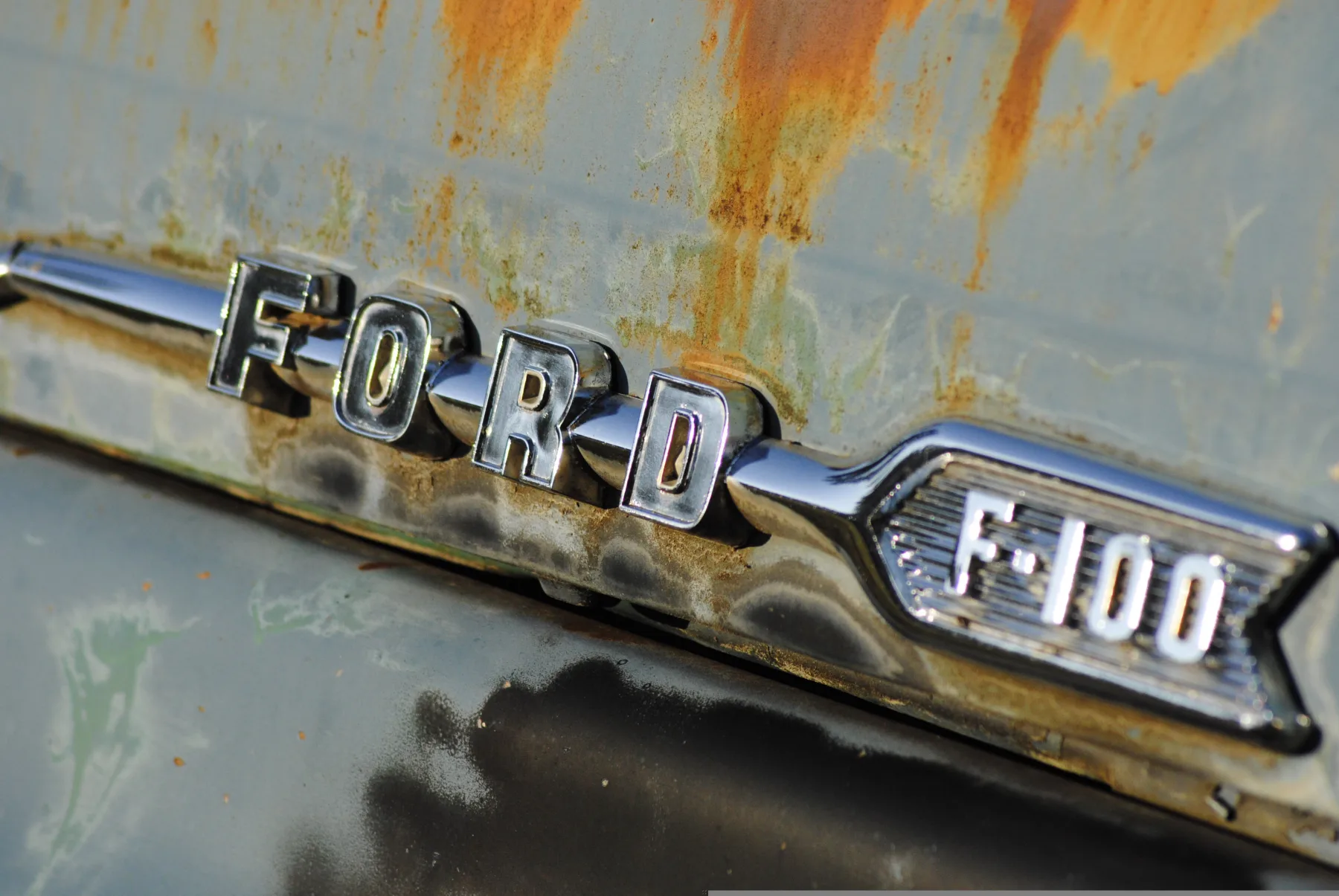
Ford F Series is not just a pickup line. It is almost a separate culture. For decades, these trucks have been used by farmers, builders, hunters, contractors, families, towing companies, and people who simply like the feeling of driving something big, strong, and unapologetically masculine.
The funny thing is that the F Series starts with a truck that can still work as a daily driver and ends with machines that are closer to commercial equipment than normal road cars. The F 150 is already a serious pickup, but when you move through F 250, F 350, F 450, F 550, F 650, and F 750, the whole idea changes. You are no longer talking about weekend trips and boat trailers. You are talking about heavy work, huge torque, serious towing, and vehicles built to earn money.
Ford F 150
The F-150 is the baby of the modern Ford F Series, but calling it small would be ridiculous. It is still a large American pickup with real towing ability, real payload, and enough engine options to fit almost any kind of driver.
The current F-150 engine range includes a 2.7-liter EcoBoost V6, a 3.5-liter EcoBoost V6, a 5.0-liter V8, a 3.5-liter PowerBoost hybrid V6, and performance engines for the Raptor models.
The 2.7-liter EcoBoost V6 is the sensible one. It makes around 325 horsepower and 400 pound-feet of torque. It is not the biggest engine, but it gives strong everyday performance and much better fuel economy than people expect from a full-size truck.
The 5.0-liter V8 is the emotional choice. Ford lists it with 400 horsepower and 410 pound-feet of torque. It can tow up to 12,800 pounds and carry a payload of up to 2,235 pounds in the right configuration. It sounds better than the smaller turbo engines and feels like the traditional heart of a proper pickup.
The 3.5-liter EcoBoost V6 is the towing hero of the F-150 range. In the right setup, it can tow up to 13,500 pounds and carry up to 2,440 pounds. This engine is proof that displacement is not everything anymore. Turbo power gives it strong low-end torque and makes the truck feel lighter than it really is.
The PowerBoost hybrid is the clever one. It combines the 3.5-liter V6 with electric assistance and gives the F-150 better city fuel economy, strong torque, and the very useful Pro Power Onboard system. That turns the truck into a mobile power source for tools, camping gear, or work equipment.
Fuel economy depends heavily on engine, cab, axle ratio, tires, and drivetrain. EPA numbers for the 2026 F-150 commonly sit around 18 to 23 mpg combined for many normal trims, while more efficient versions can reach around 23 mpg combined. Raptor versions are much thirstier, around 16 mpg combined.
The F-150 is the best choice for someone who wants one truck to do almost everything. It can tow, haul, drive to work, take the family on a trip, and still fit into normal life. It is the most balanced truck in the F Series.
Ford F 250 Super Duty
The F-250 is where the F Series starts to feel properly heavy-duty. This is the truck for people who look at the F-150 and think it is nice, but not enough.
The F 250 belongs to the Super Duty family. That means stronger frames, heavier axles, tougher suspension, larger brakes, and engines built for serious pulling.
Engine choices include the 6.8-liter gas V8, the 7.3-liter gas V8, and the 6.7-liter Power Stroke diesel V8. The 6.8-liter V8 is the entry engine, but it is still a big naturally aspirated truck motor. The 7.3-liter V8 is known as the Godzilla engine and makes around 430 horsepower and 485 pound-feet of torque in pickup form.
The diesel is the real monster. The 6.7-liter Power Stroke diesel produces huge torque, and the High Output version reaches 500 horsepower and 1,200 pound-feet of torque.
The F-250 is not bought for fuel savings. Since heavy-duty pickups are not rated by the EPA in the same way as light-duty trucks, official MPG figures are not normally listed. In real life, gas models are often thirsty, while diesel versions are better under load but more expensive to buy and maintain.
The F 250 is ideal for towing large campers, horse trailers, equipment trailers, and heavy workloads. It still feels like a pickup, but everything is stronger, heavier, and more serious than the F-150.
Ford F 350 Super Duty
The F-350 takes the same basic Super Duty idea and pushes it further. This is the truck for people who tow more often, carry more weight, and want extra confidence.
You can get the F 350 with single rear wheels or dual rear wheels. That choice changes the character of the truck completely. A single rear wheel F-350 can still work as a daily driver for someone used to big trucks. A dual rear wheel F-350 is a proper towing machine.
The engine range is similar to the F-250. You can choose gas V8 engines or the 6.7-liter Power Stroke diesel. The 7.3-liter gas V8 is a strong and simple option for people who want lower maintenance costs compared with diesel. The diesel is the better option for maximum towing and heavy commercial use.
Ford lists a maximum available payload of up to 8,000 pounds for the Super Duty range when properly configured. That is serious working capacity and shows how far these trucks have moved beyond normal pickup use.
The F-350 is not as comfortable and easy as an F-150, but that is not the point. It is built for people who need the truck to work first and be comfortable second.
Ford F 450 Super Duty
The F 450 looks like the point where the F Series becomes almost absurd, but it makes sense when you understand what it is for.
This truck is all about heavy towing. It uses the 6.7-liter Power Stroke diesel and is often chosen with dual rear wheels. It has a wider front axle setup than smaller Super Duty models, which gives it a better turning radius than you might expect from something so huge.
The F 450 is the truck for giant fifth wheel trailers, huge horse trailers, heavy equipment, and people who do not want to ask whether the truck can handle the job.
It is not the best daily driver. It is wide, heavy, and expensive. Parking in a city is not fun. Fuel consumption is not friendly. Tires, brakes, and maintenance are all more serious than on smaller trucks.
But when you attach a massive trailer, the F 450 starts to make sense. This is the kind of truck that feels calm under loads that would make smaller pickups nervous.
Ford F 550
The F 550 is different because it is mainly sold as a chassis cab. That means buyers usually add their own work body to the frame.
You might see an F 550 as a tow truck, ambulance, utility truck, small dump truck, service truck, or special commercial build. It is not really a lifestyle pickup anymore. It is a platform for work.
Engine choices usually include the 7.3-liter gas V8 and the 6.7-liter Power Stroke diesel. The gas engine makes sense for fleets that want simpler maintenance. The diesel makes sense for heavy loads and constant commercial use.
The F 550 is for businesses, not people who just want a big truck in the driveway. It is powerful, tough, and extremely capable, but it only becomes useful after the right body is fitted.
Ford F 650
The F 650 moves into medium-duty truck territory. This is no longer a pickup. This is a commercial truck.
Ford offers the F 650 with a 7.3-liter V8 gas engine or a 6.7-liter Power Stroke turbo diesel. The gas engine is rated around 335 horsepower and 468 pound-feet of torque. The diesel comes in several output levels, starting around 270 horsepower and 800 pound-feet of torque, with stronger versions available.
The F 650 can be used as a delivery truck, bucket truck, dump truck, tow truck, moving truck or heavy service vehicle. It is built for fleets, companies, and people who need a real working platform.
Ford lists the F 650 and F 750 with gross vehicle weight ratings up to 37,000 pounds and gross combined weight ratings up to 50,000 pounds in the commercial range.
Fuel consumption is not discussed like a normal pickup because these trucks vary massively depending on body, load, gearing, and work use. A box truck, dump truck, and tow truck can all use the same basic platform, but return very different real-world fuel numbers.
Ford F 750
The F 750 is the biggest regular name in the Ford F Series lineup.
It is not a truck you buy because you want to look tough at the supermarket. It is a truck you buy because your business needs it.
Like the F 650, it uses the 7.3-liter gas V8 or the 6.7-liter Power Stroke diesel. The diesel versions offer huge torque for heavy commercial work, and the strongest versions are built for serious load moving.
The F 750 can be turned into a large dump truck, construction truck, recovery truck, freight truck, or specialist commercial vehicle.
Driving one feels completely different from driving an F 150. You sit high, the truck feels wide, the chassis feels industrial, and every control reminds you that this is a working machine.
The F 750 is the end of the road for this article because beyond this point, you are no longer talking about pickups at all. You are talking about heavy commercial transport.
Which Ford F Series Truck Makes The Most Sense
The F 150 makes the most sense for normal people. It can tow, carry, cruise, and still work as a daily vehicle. It has the best fuel economy in the family and the widest appeal.
The F 250 is the right choice when towing becomes a regular part of life. It feels tougher than the F 150 and gives more confidence with heavy trailers.
The F 350 is for people who want more payload and serious towing ability, especially with dual rear wheels.
The F 450 is for big trailers and people who need maximum towing stability.
The F 550 is for commercial bodies and special work builds.
The F 650 and F 750 are proper medium-duty trucks. They are not lifestyle machines. They are work tools.
Final Thoughts
The Ford F Series is special because it covers such a wide range. One end of the family can take the kids to school and pull a fishing boat. The other end can carry a dump body or tow commercial equipment all day.
There is something very old school and masculine about these trucks, but they are not simple machines anymore. Modern F Series trucks have turbo engines, hybrid systems, advanced towing cameras, trailer assist features, huge touchscreens, and diesel engines with torque numbers that would have sounded insane not long ago.
The F-150 is the everyday hero. The F 250 and F 350 are the serious workers. The F 450 is the towing beast. The F-550 is a commercial platform. The F 650 and F 750 are full business machines.
That is what makes the Ford F Series so impressive. It is not one truck. It is a ladder of power, size, and purpose.
You start with a pickup and end with a machine that belongs on a job site.