The Day That Changed Latvia Forever
On June 17, 1940, Soviet troops crossed the Latvian border and occupied the country without significant military resistance. For decades during Soviet rule, this event was officially described as an act of friendship and assistance that helped Latvia begin a socialist revolution.
History tells a very different story.
Today, historians widely agree that the occupation of Latvia was not a spontaneous political transformation or a popular uprising. It was the result of years of diplomatic pressure, military threats, and secret agreements between two totalitarian regimes that had already divided Eastern Europe into spheres of influence.
The events of 1940 changed Latvia forever. Independence was lost, thousands of people were deported, and the country remained under Soviet control for more than fifty years.
June 17 is now officially commemorated as the Day of Occupation in Latvia.
The Secret Agreement Between Stalin and Hitler
To understand how Latvia lost its independence, it is necessary to go back to August 23, 1939.
On that day, Nazi Germany and the Soviet Union signed the Molotov-Ribbentrop Pact, officially a non-aggression treaty between the two countries.
The most important part of the agreement, however, remained secret.
Hidden protocols divided Eastern Europe into spheres of influence. Poland was partitioned between Germany and the Soviet Union. Latvia and Estonia were assigned to the Soviet sphere, while Lithuania was initially placed under German influence before later being exchanged in another agreement signed on September 28, 1939.
For Stalin, these agreements opened the door for expansion westward.
For the Baltic states, they marked the beginning of the end of independence.
The existence of the secret protocols was denied by Soviet authorities for decades. Only in 1989 did the Soviet Congress of People's Deputies officially acknowledge their existence and condemn them.
The Mutual Assistance Treaties
In September and October of 1939, Moscow began pressuring the Baltic states into signing so-called Mutual Assistance Treaties.
Latvia signed its treaty on October 5, 1939.
Officially, the agreement promised military cooperation and security.
In reality, it allowed the Soviet Union to establish military bases and station around 25,000 troops on Latvian territory.
This number was close to the size of Latvia's own armed forces.
The balance of power shifted dramatically.
Moscow continued demanding additional rights and privileges for its military presence, gradually limiting Latvia's ability to act independently.
Although Latvia remained formally sovereign, the country was increasingly vulnerable to Soviet pressure.
The Winter War Changed Soviet Plans
Many historians believe the Soviet Union may have occupied the Baltic states even earlier.
But events in Finland changed Stalin's calculations.
On November 30, 1939, the Soviet Union invaded Finland, beginning what became known as the Winter War.
The Soviet army possessed overwhelming advantages in manpower, tanks, and aircraft.
Yet Finland resisted fiercely.
The war lasted until March 13, 1940, and exposed serious weaknesses within the Red Army.
Soviet commanders struggled with logistics and coordination. Poor leadership, partly caused by Stalin's military purges during the 1930s, led to costly mistakes.
Although the Soviet Union eventually forced Finland to cede territory, the victory came at a heavy price.
The lessons of the Winter War influenced Soviet military planning.
Future operations would rely on overwhelming force and would ideally be conducted during favorable weather conditions.
The Baltic states became the next target.
Europe Was Falling Apart
The timing of the Soviet occupation was not accidental.
During the spring of 1940, Europe was collapsing under Nazi military offensives.
On April 9, Germany invaded Denmark and Norway.
Denmark surrendered within hours.
Norway resisted longer but eventually fell in June.
Then, on May 10, Germany launched its attack against France, Belgium, and the Netherlands.
The campaign was devastatingly successful.
Paris fell on June 14.
France officially surrendered on June 22.
Britain remained in the war, but after evacuating more than 330,000 soldiers from Dunkirk during Operation Dynamo, its priority was defending its own territory.
The Baltic states found themselves isolated.
No ally was capable of helping them.
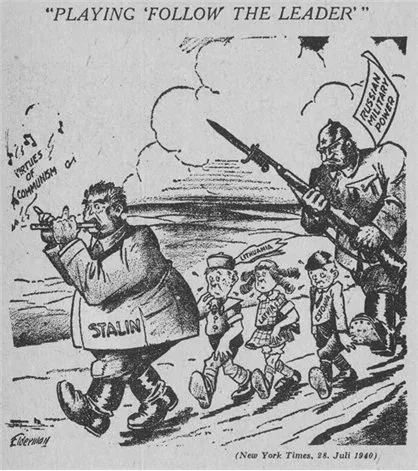
Stalin knew this.
The Ultimatum
On June 14, 1940, the Soviet Union presented an ultimatum to Lithuania.
Soviet troops entered the country the next day.
At the same time, Soviet security forces attacked several Latvian border posts in the Abrene region.
The best known incident occurred at Maslenki, where border guards and civilians were killed.
The Soviet government blamed Latvia for failing to maintain security and used the incident as justification for further pressure.
On June 16, Latvia received its own ultimatum.
Moscow demanded the formation of a new government and unrestricted entry for additional Soviet troops.
The Latvian government understood that military resistance would almost certainly end in defeat.
The country was surrounded and already hosted Soviet forces inside its territory.
The ultimatum was accepted.
On June 17, 1940, Soviet troops entered Latvia.
Occupation Disguised As Revolution
Military occupation alone was not enough.
The Soviet Union wanted legitimacy.
Senior Soviet official Andrey Vyshinsky arrived in Riga on June 18.
He had previously served as the chief prosecutor during Stalin's Great Purge and was notorious for overseeing political trials.
His mission in Latvia was political.
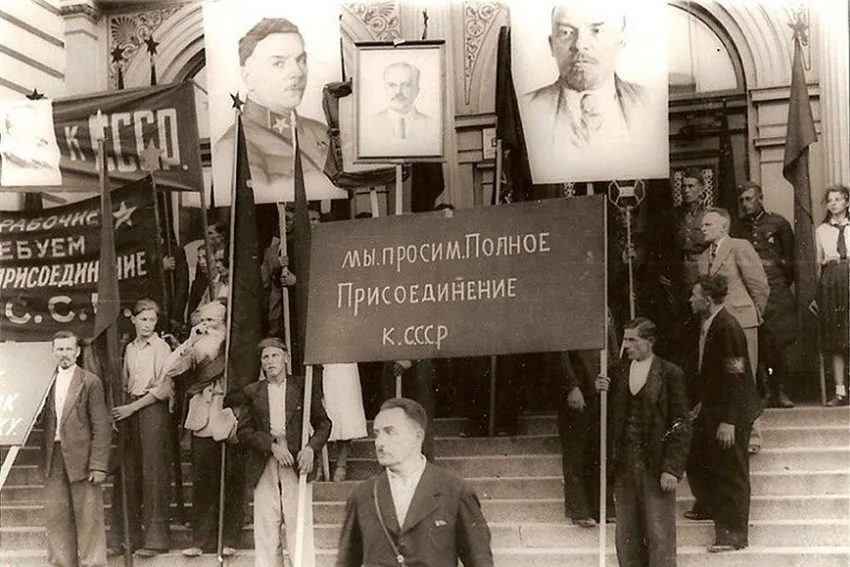
A new government loyal to Moscow was formed.
Parliamentary elections were organized in July.
Only candidates approved by Soviet authorities were allowed to participate.
The outcome was predetermined.
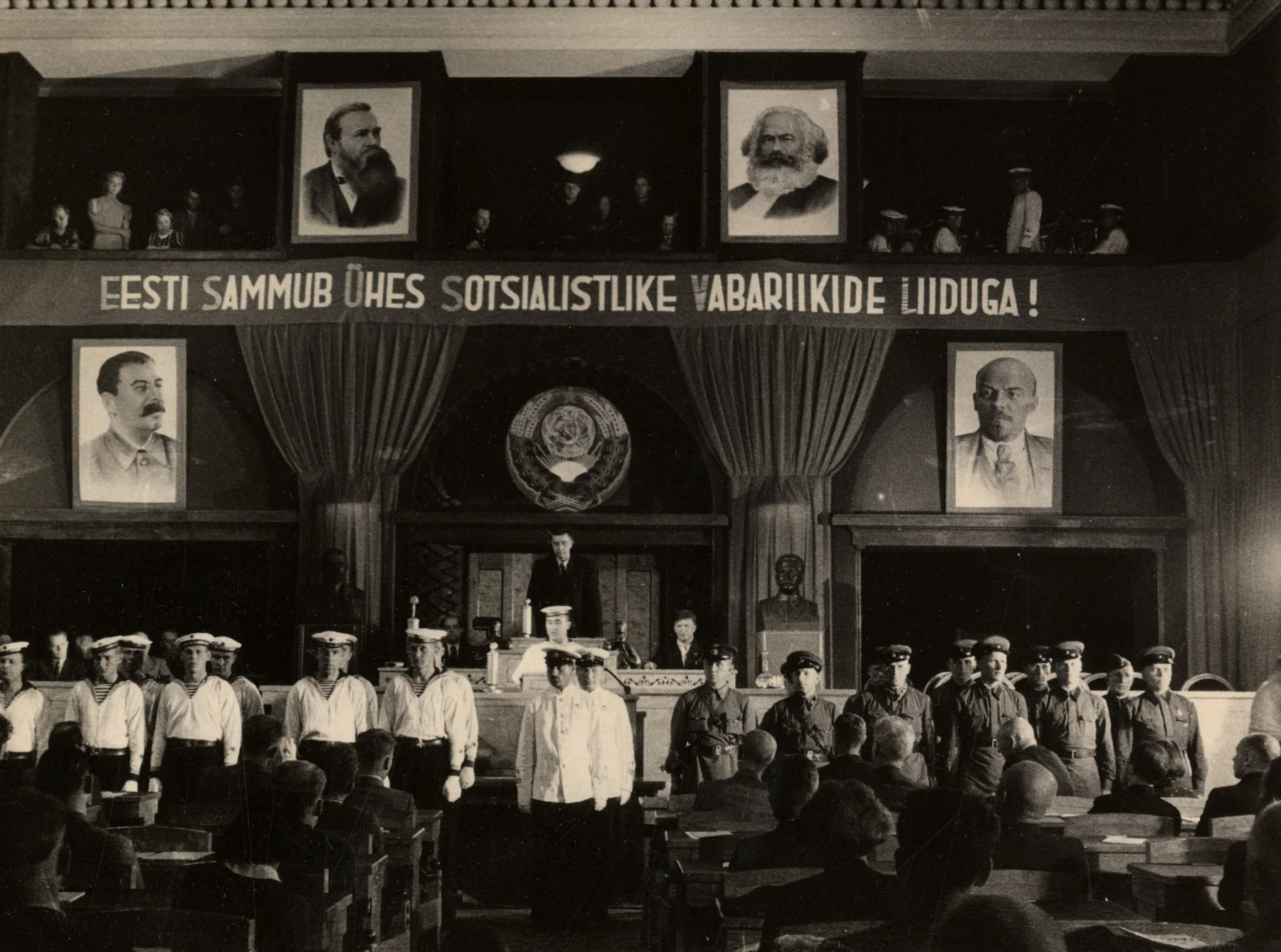
Soon afterward, the newly elected parliament requested Latvia's admission into the Soviet Union.
On August 5, 1940, Latvia officially became the Latvian Soviet Socialist Republic.
The entire process lasted less than two months.
Many historians describe these events as a carefully orchestrated annexation hidden behind legal procedures and political theater.
A Model Used Elsewhere
The Soviet strategy employed in Latvia was not unique.
A similar approach had already been used in Eastern Poland after September 17, 1939, when the Red Army invaded territories inhabited largely by Ukrainians and Belarusians.
Military occupation was followed by controlled elections, new political institutions, and incorporation into the Soviet Union.
The timeline was remarkably similar.
Occupation was followed within weeks by elections.
Soon afterward came parliamentary approval.
Finally, annexation was formalized.
The same sequence later appeared in the Baltic states.
The process was efficient and carefully planned.
Romania Was Next
In the summer of 1940, the Soviet Union expanded further.
Attention turned toward Romania.
On June 26, Moscow issued an ultimatum demanding Bessarabia and Northern Bukovina.
Romania mobilized its army but found itself diplomatically isolated.
After consultations with its allies, the Romanian government accepted Soviet demands.
The territories were occupied without major fighting.
Diplomatic records reveal that Soviet Foreign Minister Vyacheslav Molotov argued that Northern Bukovina was necessary for the unification of Ukrainian lands.
German diplomats viewed these claims with skepticism.
Nevertheless, Nazi Germany did not intervene.
The Soviet Union continued expanding westward.
The Human Cost
The consequences of Soviet occupation extended far beyond political borders.
The years that followed brought repression, censorship, and deportations.
One of the darkest episodes occurred on June 14, 1941.
In a coordinated operation across the Baltic states, Soviet authorities deported more than 15,000 people from Latvia.
Entire families were loaded into cattle wagons and transported to Siberia and other remote regions of the Soviet Union.
Many never returned.
Politicians, military officers, business owners, teachers, and ordinary citizens were among the victims.
The deportations left deep scars on Latvian society.
Thousands of families continue researching the fate of relatives who disappeared during those years.
The Occupation Debate
For decades, Soviet authorities insisted that Latvia had voluntarily joined the Soviet Union.
This narrative was taught in schools and promoted through official media.
After Latvia restored independence in 1991, historians gained access to archives that painted a much clearer picture.
Documents revealed the extent of Soviet planning and the pressure placed on Baltic governments.
Today, Latvia, Estonia, and Lithuania officially describe the events of 1940 as an occupation.
The European Parliament has repeatedly condemned both Nazi and Soviet totalitarian crimes and recognized the Molotov-Ribbentrop Pact as one of the key factors that led to the outbreak of World War Two and the destruction of independent states in Eastern Europe.
Remembering The Past
The history of Latvia's occupation is painful.
It is a story of lost independence, political manipulation, and human suffering.
But it is also a story of survival.
Despite decades of occupation, Latvia preserved its language, culture, and identity.
In 1991, after the collapse of the Soviet Union, Latvia restored its independence.
The country later joined both NATO and the European Union, becoming part of a democratic Europe once again.
History cannot be changed.
But understanding it matters.
The events of 1940 remind us that freedom can be fragile, democracy requires protection, and political decisions made in secret can shape the lives of millions for generations.
Sources:
The United States Holocaust Memorial Museum, Soviet Occupation of the Baltic States.
European Parliament Resolution on European Conscience and Totalitarianism, 2009.
Latvian National Archives and Museum of the Occupation of Latvia.
This article is based on historical materials and archival information regarding the Soviet occupation of Latvia in 1940. Inspired by historical research provided in the source material.